

What Domain Is Animalia In
What is Kingdom Animalia? A quick overview
All animals are members of theKingdom Animalia (besides chosen Metazoa). Animals are multicellular organisms that tin move and consume other organisms for energy. It is estimated that around 9 or 10 meg species of animals inhabit the World. Animals come in all kinds of sizes and shapes. So far, we take defined 31 known phyla, and several of them only exist in fossil records.
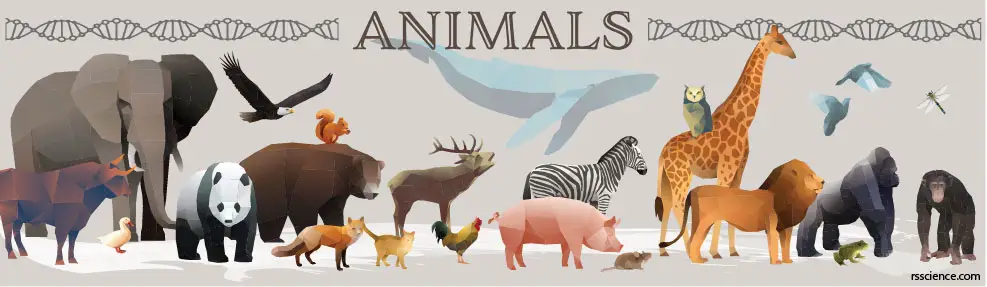
It's difficult to imagine that a sea star and a bald hawkeye are in the same kingdom, but they share certain characteristics that state them together:
(1) Eukaryotes, which have true nuclei in animal cells. Eukaryote cells are more than complex than the simpler prokaryote cells found in bacteria.
(2) Multicellular, which means that they are made upwards of more than one cell.
(three) Heterotrophic, which means they can't produce their ain food. Members of the Animalia Kingdom must ingest, or eat other organisms.
(4) No cell wall: plants, fungi, and prokaryote cells have a cell wall, which is a rigid outer layer that gives cells construction. Animal cells do non have this structure. As a result, animal cells are more flexible to change their shapes and movements.
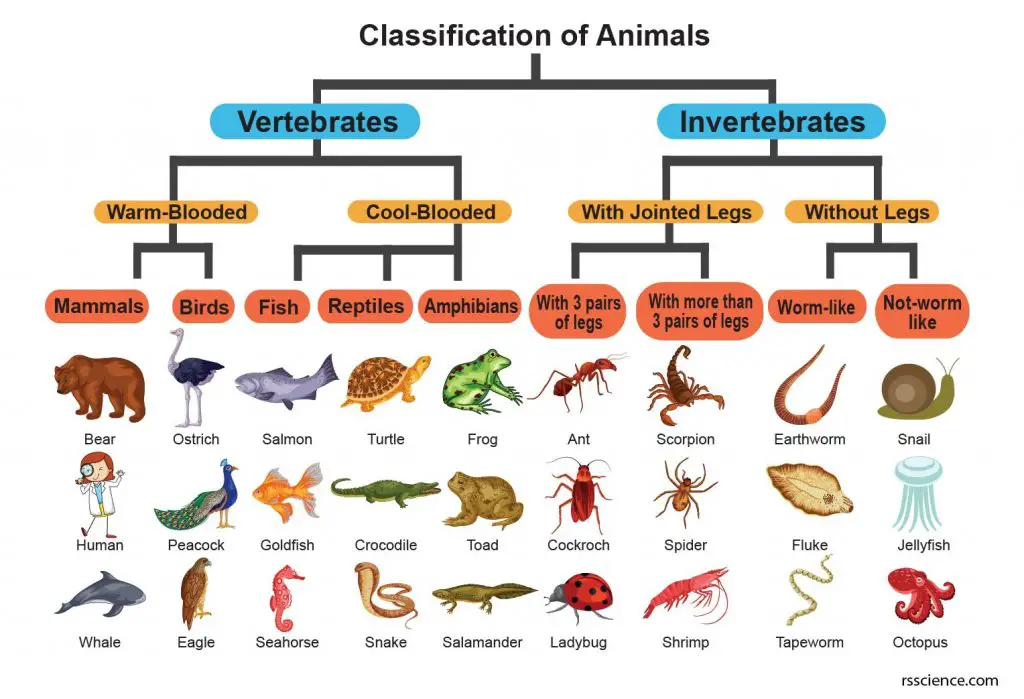
[In this image] A hierarchical tree to classify the diverse members of animals.
This diagram but shows a very little part of the Kingdom Animalia. Yet, y'all still tin can see how we grouping them by the features of their body plans. You will larn how scientists sort these creatures professionally later in this article.
In this article, you will learn more about the characteristics and diversity of Kingdom Animalia. You lot will as well come across many examples of different animal types. Yous will learn how taxonomists (biologists that group organisms into categories) classify these creatures systematically, like the orders of books in a library.
Role ane. Characteristics of fauna cells
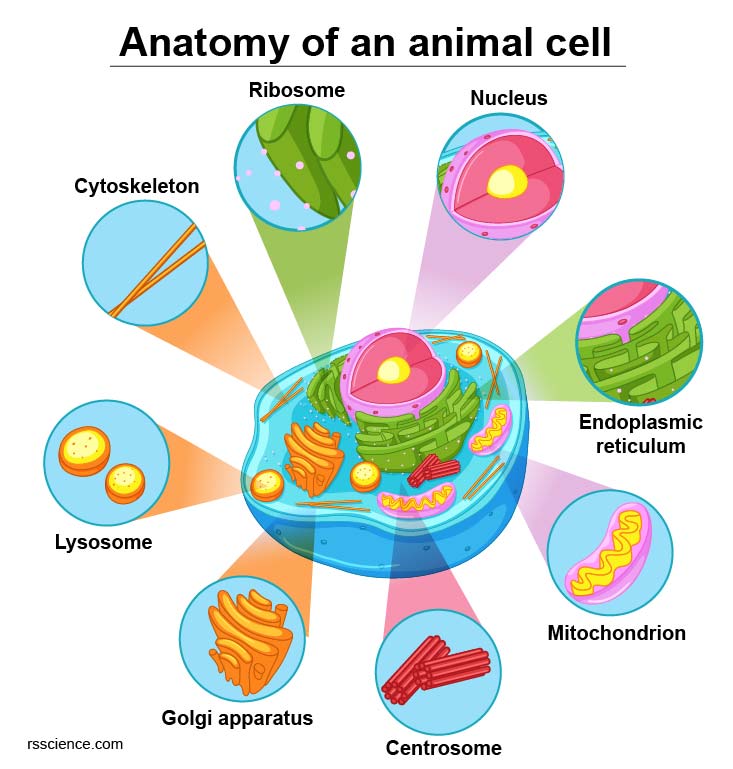
[In this figure]Diagram of an animal prison cell.
It has cell organelles, including the nucleus, mitochondria, ribosomes, endoplasmic reticulum, Golgi appliance, lysosome, centrosome, peroxisome, and cytoskeleton. Nevertheless, fauna cells practice not have a jail cell wall, chloroplasts, and big vacuole.
Animal cells lack the rigid cell walls
Similar different organs within the body, brute cells include various components known as cell organelles that perform dissimilar functions to sustain the cells as a whole. Compared to plant and fungus cells, animal cells don't acceptprison cell walls. As a result, most animal cells are circular and flexible, whereas near plant cells are rectangular and rigid. Except for a few animals, most animals are motile, assuasive them to respond to stimuli, notice food, and reproduce effectively.
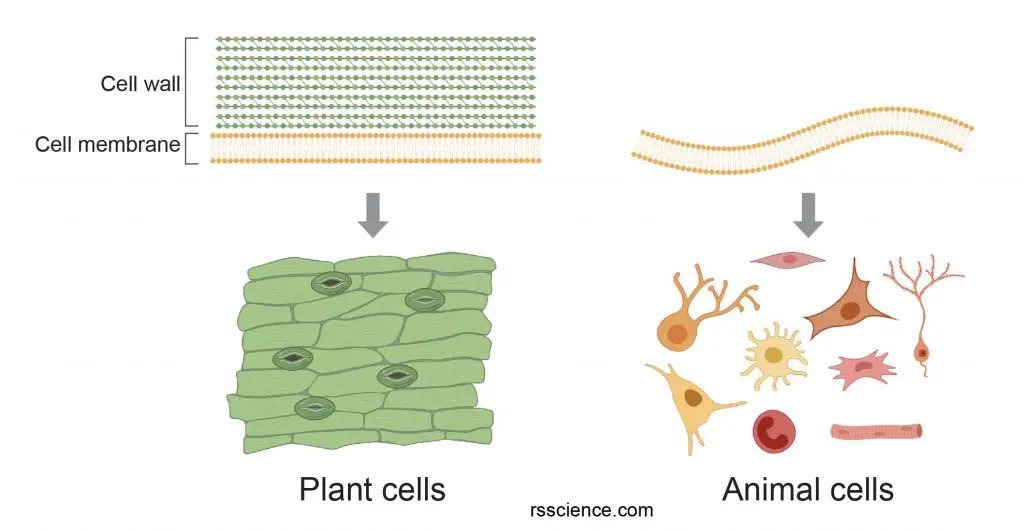
[In this figure] Cell walls provide additional protective layers outside the jail cell membranes.
Animal cells alive as heterotrophs
Another major difference is that brute cells only have mitochondria, whereas plant cells have both mitochondria and chloroplasts. Mitochondria function like the powerhouses in the cells and convert sugars into biological energy called ATP. On the other hand, chloroplasts blot sunlight and convert CO2 and h2o into sugars and oxygen. For this reason, animals are all Heterotrophs, meaning they cannot produce their own food. Instead, animals accept nutrition from other sources. Nearly ingest nutrient and digest it in an internal cavity.
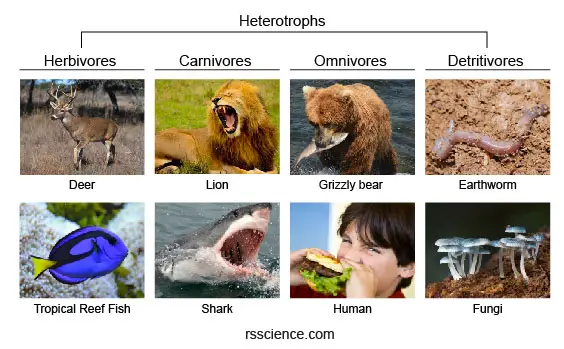
[In this paradigm]Animals are all heterotrophs.
Based on their relationship in a food chain, heterotrophs can be further classified every bit herbivores (eat plants), carnivores (consume meat), omnivores (eat both plants and meat), and detritivores (decompose the remains of plants and animals).
Animal bodies are assembled by many cells
All animals are multicellular organisms. Their bodies are built by cells (every bit building blocks) following a blueprint (written in the genome). Unlike unmarried-cellular organisms that one prison cell needs to practise everything, animal cells specialize into many types so each cell type can focus and master certain functions. For case, heart musculus cells focus on chirapsia, and brain cells focus on memory and thinking.
The bodies of well-nigh animals (except sponges) are made up of cells organized into tissues. Each tissue specializes to some degree to perform specific functions. Often, tissues organize into even more specialized organs.
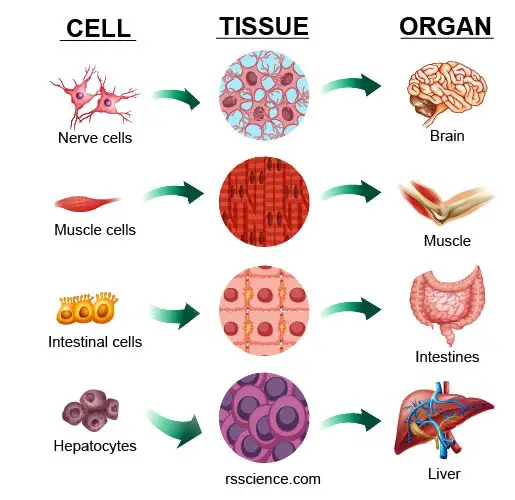
[In this paradigm] The arrangement of cells into tissues, and so into organs, in multicellular organisms.
Animals tin can motility around and reproduce sexually
Most animals can move compared to plants and fungi. They reproduce sexually by means of differentiated eggs and sperms. Near animals are diploid (2n), pregnant that the cells incorporate ii copies of the genetic material.
The development of nearly animals follows distinctive stages, including a zygote, formed by the product of the first few divisions of cells afterward fertilization; a blastula, which is a hollow brawl of cells formed by the developing zygote; and a gastrula, which is formed when the blastula folds in on itself to form a double-walled structure with an opening to the exterior, the blastopore.
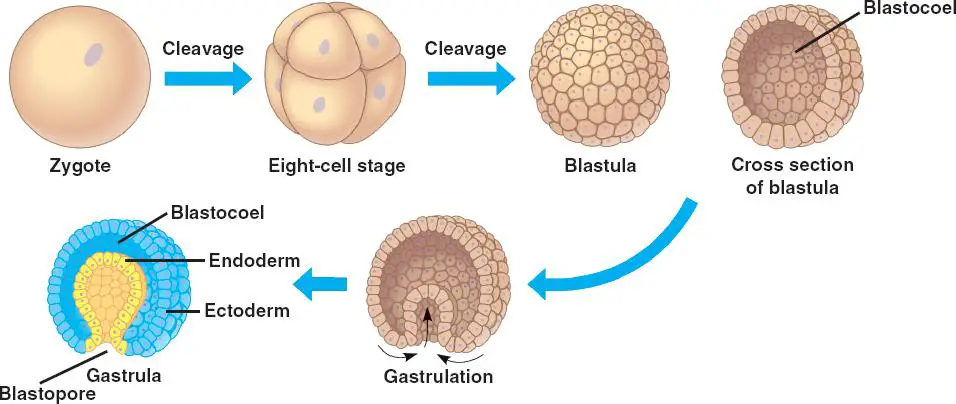
[In this image] The procedure of early human embryonic development.
Well-nigh animals besides follow the same process in the earlies stages of life.
Photograph credit: Report.com
Part 2. How to allocate all these animals with different shapes and sizes?
Huge diversity of animals
The Animalia Kingdom is vast, with many unique and fascinating organisms. It is estimated that around nine or 10 one thousand thousand species of animals inhabit the Earth. The verbal number is non known, and all estimates are rough. If you as well consider extinct species and those just shown in fossils, the number could exist x,000 times more.
Animals range in size from no more than than a few cells to the giants weighing several tons, such as blue whales and behemothic squid. By far, the nearly known species of animals are insects (1 one thousand thousand). Mollusks, crustaceans, and nematodes are also very diverse. By this measure out, our ain group, the vertebrates, is relatively inconsequential from a diversity perspective.
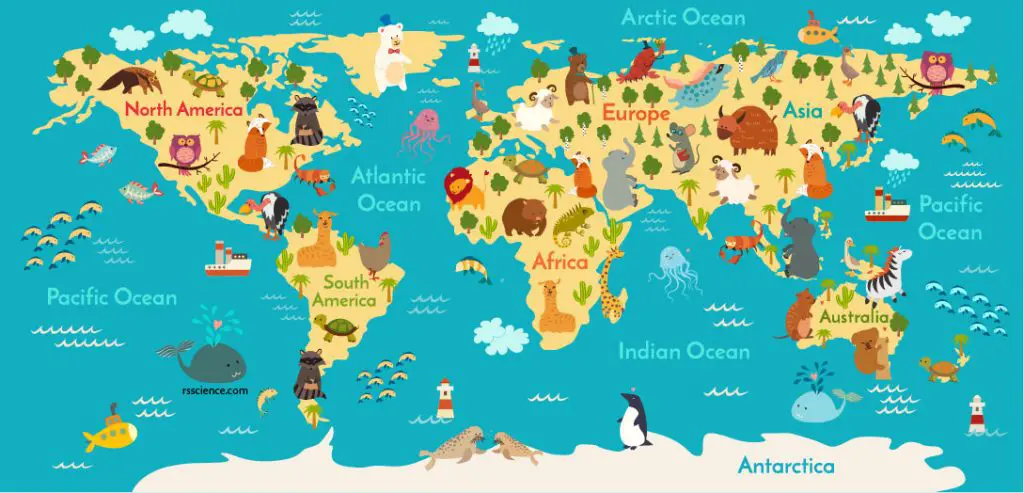
[In this image] A globe map showing the diversity of animals.
Hierarchical classification of animals
In society for united states to sympathise how all living organisms are related, nosotros classified them into dissimilar groups. This hierarchical classification (called Taxonomy) helps us to place every organism in its unique place based on its development.
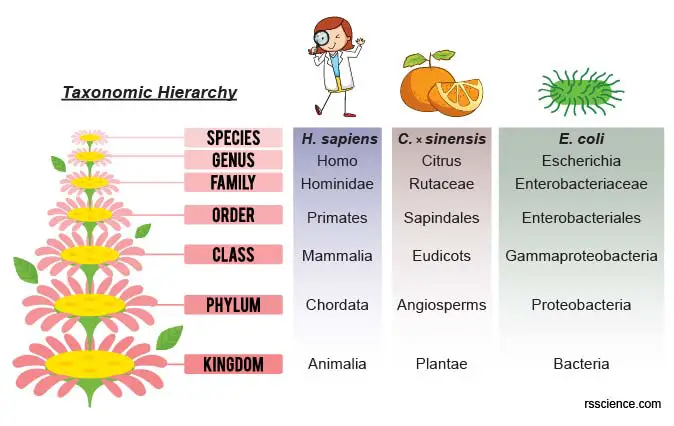
[In this paradigm] Taxonomy, meaning "organisation", is the science of defining and naming groups of biological organisms on the basis of shared characteristics.
Equally you can see here, taxonomic rank has seven major levels – Kingdom, Phylum, Form, Guild, Family unit, Genus, and Species. Nether this system, each organism (here, human, orangish, and a bacterium called E. Coli in our intestine) has its unique position.
The broadest level of biological classification is a Domain. As you can see in the prototype beneath, at that place are three Domains (Archaea, Bacteria, and Eukarya). Animalia is one of the Kingdoms that belong to the Domain Eukarya (significant they are all made of eukaryotic cells).
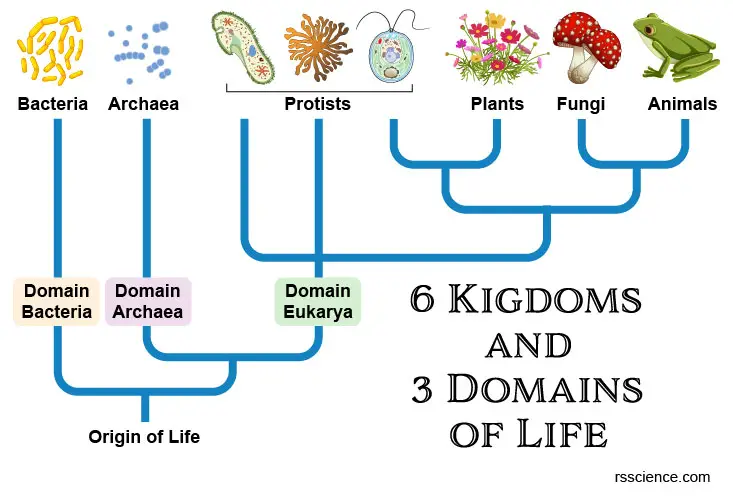
[In this paradigm] There are three Domains (Bacteria, Archaea, and Eukaryote) and six Kingdoms (Leaner, Archaea, Protists, Plants, Fungi, and Animals) that classify all the living organisms on Earth.
Acquire more:
The level beneath Kingdom is thePhylum. At this level, you can run across the major diversity of different animals. The Animalia Kingdom is divided into31 phyla (plural form of phylum) by their main features. For example, animals that have a notochord, a hollow dorsal nerve cord (for humans, the spine), vest to the phylum Chordata.
Animals carrying a beat out to protect their soft bodies are members of the phylum Mollusca. Insects and spiders have different numbers of legs, merely both vest to the phylum Arthropoda due to their difficult exoskeletons.
Earthworms, roundworms, tapeworms, and horsehair worms look very like with a wire-similar torso. Even so, they are classified into phyla Annelida, Nematoda, Platyhelminthes, and Nematomorpha, respectively.
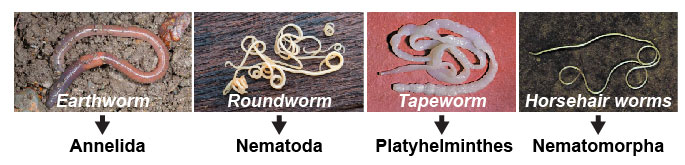
[In this image] These 4 kinds of legless "worms" in fact belong to four different phyla: Annelida, Nematoda, Platyhelminthes, and Nematomorpha.
Photograph credit: wiki.
Note: The proper name of phylum is usually ending with "-a", like Nematoda and Chordata. When nosotros refer to the members in the phylum, "-a" is removed or changed to "-due east", like Nematodes and Chordates.
We will selection several main phyla to innovate their members in this article later on.
Body plans of animals
Animals are classified according to morphological and developmental characteristics, such every bit their body plans.
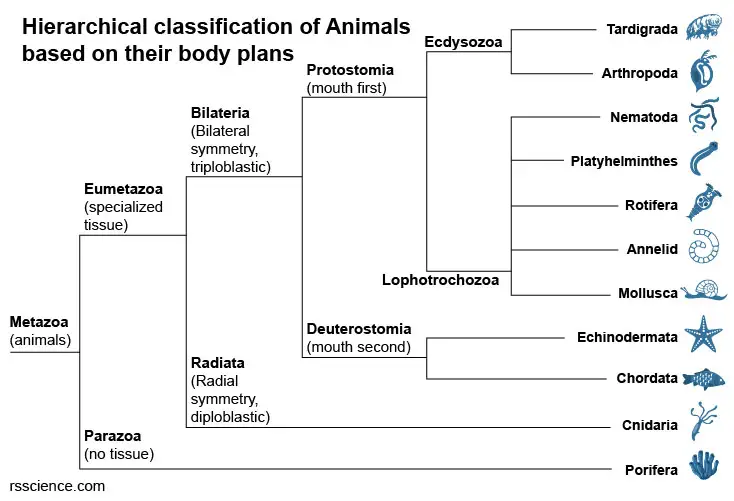
[In this image] The step-by-footstep process for scientists to classify the diverse members of animals into groups past the characteristics of their body plans.
(1) Body symmetry
Except for the most primitive animal group – phylum Porifera or the sponges, the remaining animal groups tin can exist divided into radially and bilaterally symmetric animals.
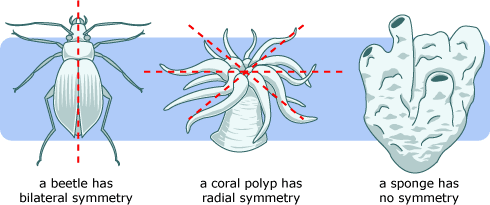
[In this image] Examples of animal trunk symmetry.
Photo credit: UC Museum of Paleontology Understanding Development
- Radially symmetrical animals are like phylum Cnidaria (jellyfish, corals, and sea anemones), phylum Echinoderm (sea stars, sea urchins), and phylum Ctenophora (rummage jellies).
- Bilaterally symmetrical animals can be divided into matching halves by drawing a line down the center. All vertebrates, insects, flatworms, and many others are all bilaterally symmetrical.
(2) Layers of tissues
Nearly animal species undergo a layering of early tissues during embryonic development. These layers are calledgerm layers. Each layer develops into a specific set of tissues and organs.
- Radially symmetrical animals develop two germ layers, an inner layer (endoderm) and an outer layer (ectoderm). These animals are called diploblasts.
- Bilaterally symmetrical animals develop three germ layers: an inner layer (endoderm), an outer layer (ectoderm), and a middle layer (mesoderm). Animals with three germ layers are called triploblasts.
(iii) Presence or absence of a body cavity
Symmetrical animals are farther divided based on types of torso cavities (or called coeloms). The body cavity is a fluid-filled cavity between the body wall and digestive tract. For example, we accept thoracic (contains heart, lungs), abdominal (digestive organs, spleen, kidneys), and pelvic (bladder, reproductive organs) cavities.
- Acoelomate is an animal that does not have a body cavity. Examples are flatworms (phylum Platyhelminthes). Acoelomates also lack a cardiovascular arrangement and respiratory system and must rely on improvidence across their flat, sparse bodies for gas exchange.
- Eucoelomate is an beast with a truthful torso crenel. All vertebrates are in this grouping.
- Pseudocoelomate is an creature with a primitive type of trunk cavity (run into paradigm below for the difference). Roundworms (phylum nematode) and Gastrotrichs (phylum Gastrotricha) are examples.
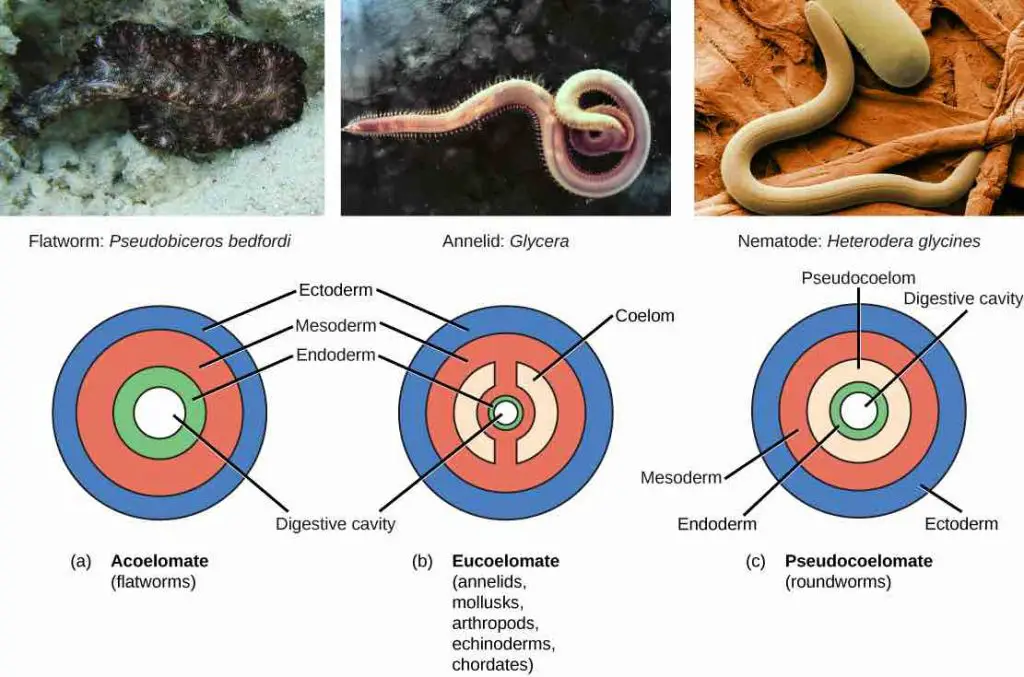
[In this image] Three types of torso cavities.
Acoelomates have no body cavity. Eucoelomates have a body cavity within the mesoderm, chosen a coelom, which is lined with mesoderm tissue. Pseudocoelomates have a similar body cavity, simply it is lined with mesoderm and endoderm tissue.
Photo source: openstax
(4) The society of oral fissure and anus
All the animals with a truthful torso cavity can exist further divided into two major groups. This divergence reflects the fate of a structure called the blastopore, which becomes the oral cavity in protostomes and the anus in deuterostomes at early embryonic development.
- Protostomes include phyla such as Arthropoda (insects), Mollusca (shellfish), and Annelida (earthworms). The give-and-take protostome came from Greek words significant "mouth first". The blastopore becomes the oral fissure in protostomes.
- Deuterostomes include Echinodermata (sea stars) and Chordata (mammals). Deuterostome originates from words meaning "mouth second" (in this case, the anus develops first). The blastopore becomes the anus in deuterostomes.
Summary 1
one. Organisms in the Animalia Kingdom share these characteristics:
(i) Eukaryotes, which have true nuclei in animal cells.
(ii) Multicellular, which means that they are made upward of more than than one cell.
(3) Heterotrophic, which means they tin can't produce their own food. They must ingest, or consume, other organisms.
(4) No cell wall: plants, fungi, and prokaryote cells have a cell wall, which is a rigid outer layer that gives cells structure. Animal cells do not accept this structure.
2.
The level under the Kingdom Animalia is the Phylum. At that place are 31 known phyla, only several of them are extinct.
3. Members of the same Phylum are grouped together based on shared features of their body plans. The criteria could be, for case, radical or bilateral symmetry, and the presence or absence of body cavities.

What Domain Is Animalia In,
Source: https://rsscience.com/kingdom-animalia-classification/
Posted by: schneiderbroffely.blogspot.com
0 Response to "What Domain Is Animalia In"
Post a Comment